
Wisdom Teeth in Faridabad.
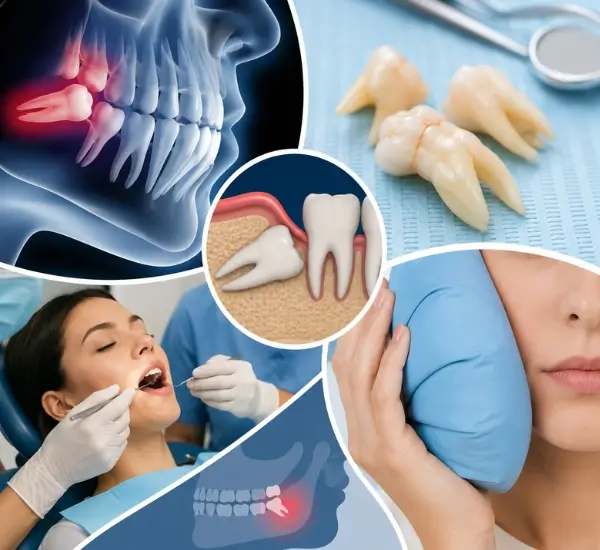
Wisdom teeth removed before they cause years of pain, infection and crowding.
At Om Dental Clinic, every wisdom tooth case starts with a CBCT 3D scan to map the position of the inferior alveolar nerve. This dramatically reduces surgical risk and lets us choose the right technique — simple extraction, surgical extraction with sectioning, or piezosurgery for deeply impacted teeth.
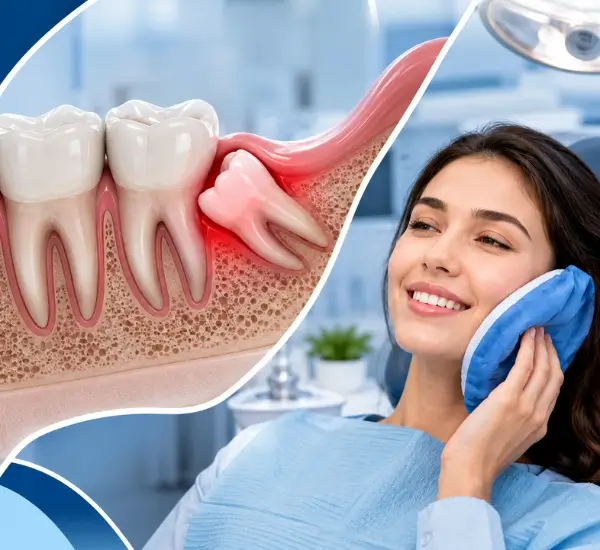
6 reasons patients choose wisdom teeth removal at Om Dental Clinic.
A clear, step-by-step wisdom teeth removal journey at Om Dental Clinic.
The equipment and materials we use.
Is wisdom teeth removal right for you?
Honest, upfront pricing in INR.
₹25,000
₹35,000
₹55,000
Important: CBCT 3D scan is included with surgical and complex cases. Removing multiple wisdom teeth in one appointment is often discounted — discuss with your treatment coordinator.
Four reasons patients
across Faridabad choose us.
The most asked wisdom teeth removal questions.
The surgery itself is painless under local anaesthesia — you feel pressure but no pain. The first 2–3 days after surgery are mildly uncomfortable, controlled with the painkillers we prescribe. Most patients return to work or college after 2 days off.
Most patients are back to normal in 5–7 days. Soft food for 3 days, no smoking or straws for 5 days, and gentle salt-water rinses from day 2. Sutures dissolve on their own. A 7-day review confirms healing.
Not necessarily. We only remove wisdom teeth that are problematic, impacted, or pose a future risk. Wisdom teeth that are fully erupted, properly aligned and easy to clean can often stay. The CBCT scan helps make this decision objectively.
At Om Dental Clinic, simple wisdom tooth extraction is ₹2,500, surgical extraction with partial impaction is around ₹6,000, and complex bony impactions are ₹12,000. CBCT is included for surgical cases.
Ideally between ages 17 and 25, when roots are not fully formed and healing is fastest. However, removal at any age is possible if the tooth is causing pain, infection, or damaging neighbouring teeth.
The main risk is temporary numbness of the lower lip or tongue if the inferior alveolar nerve is irritated — this is why we CBCT-plan every case. Other risks include dry socket (3–5%), infection (under 2%), and bleeding. All are manageable with proper aftercare.
Yes — local anaesthesia does not affect driving ability. If you opt for nitrous oxide sedation or are particularly anxious, we recommend a friend or family member accompany you.